Open Space, Yes. Going It Alone, No.
Everyone in Winnetka wants to protect its parks and green space. The question the Council keeps skipping is who decides what happens to public land, what it costs, and whether the Village will make that decision with the other boards or go around them.
The vote is December 1
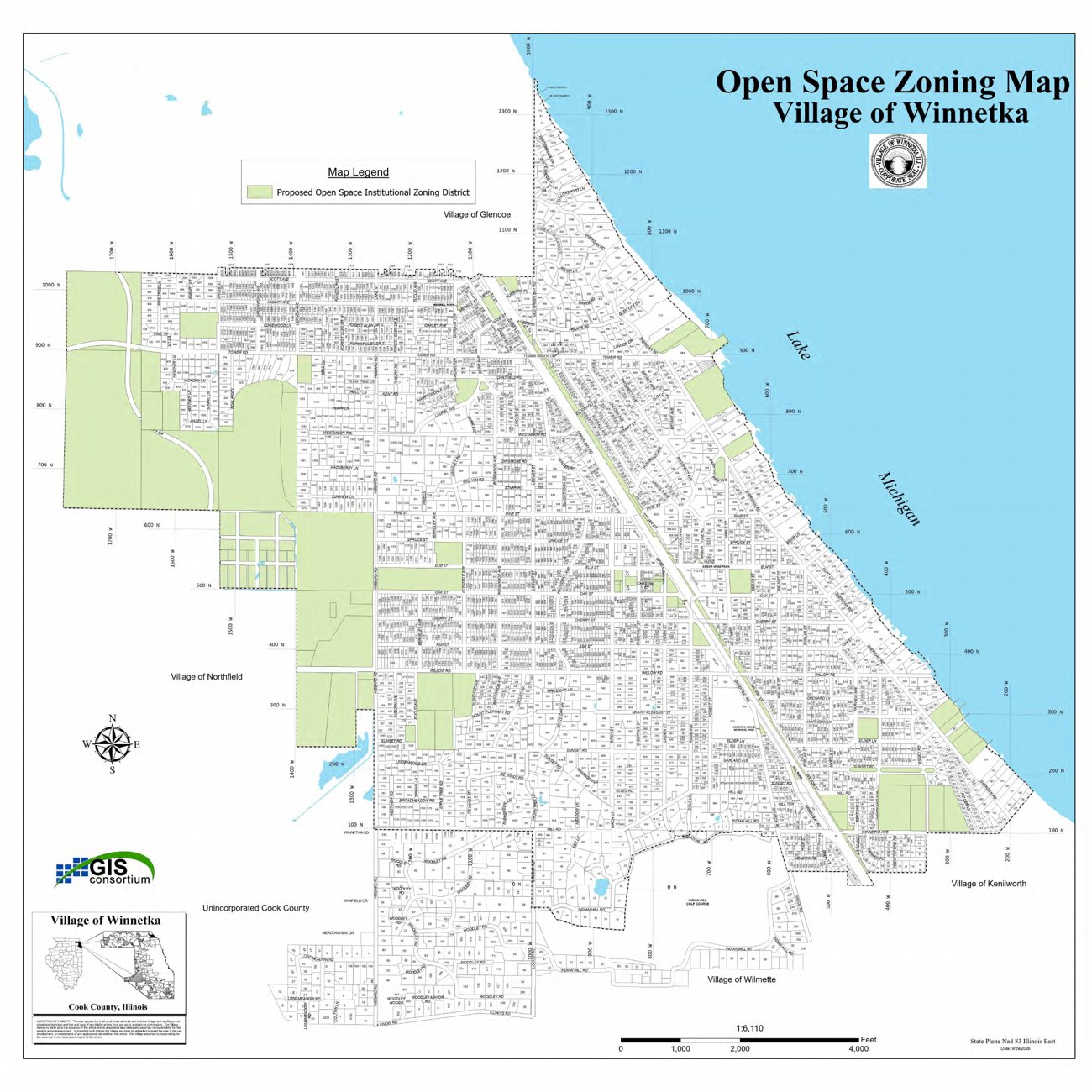
Both ordinances return to the Village Council on Tuesday, December 1, at 7 p.m. Everything in one place — both ordinances, the zoning map, all 44 properties and Ms. Hanley's letter — is in OTW's Open Space Resource Center.
Colin Cross lives on Bell Lane. On October 20 he told the Village Council he had learned about the proposed Open Space Institutional district only two weeks earlier, then said what the evening will be remembered for:
“The residents of Winnetka trust you to be well informed when you make a decision. Passing the ordinance and then writing the rules is not being well informed. I have no opinion one way or another how it might come out. But you definitely need to rethink the process.”
Open space matters to nearly everyone, and no one in the room on October 20 was against it. The question is how a decision this large should be made and what the Village Council's proper role is in making it.
What the Village wants
The Village would create a new zoning district, Open Space Institutional — OSI — and place 44 public properties in it:
- District 36 schools
- New Trier's D203 Winnetka campus
- Every park and beach
- Forest preserve land
- The library
- Village Hall and other Village facilities
And two downtown commercial parcels:
- 512 Chestnut, the former Post Office site, and
- Chestnut Court — Moffatt Mall
Apart from Village Hall, the Village's own facilities, the Post Office site and Chestnut Court–Moffatt Mall, the Village does not own this land. Each property is owned, not just managed, by a separate government with its own elected board and its own budget: District 36, New Trier, the Park District, the Library, or the Forest Preserves.
Its case has strengths. Parks and schools are now zoned as if they were houses, which every board agrees is a burden. Some neighboring towns have similar zoning districts for these uses, and the Plan Commission recommended approval. For the boards that own the land today, nothing changes yet.
The change comes if land is sold: today a buyer of R-2 land could build to R-2 rules, but under the ordinance a buyer wanting anything other than a public use would first need a rezoning from the Village Council.
Trustee Rob Apatoff put the purpose plainly: residents, not “four members of a taxing body board,” should have the final say. His point has merit. It is also the heart of the problem.
Residents have not yet had that say. Council members call this a mandate. It rests on one yes-or-no question in the 2024 Caucus survey: “Should the Village preserve all open space in Winnetka from being developed or sold to a private entity?” Seventy-five percent said yes. That is 940 people, about 7.5% of residents, in an opt-in online poll that named no costs, no trade-offs, and no definition of open space. In the same survey, 55% said Winnetka already has enough open space.
Where OTW stands.
We support protecting Winnetka's open space. We oppose the Open Space Institutional district as intended, and the structure of the committee that will guide the decisions. We ask the Council not to adopt it on December 1. Write the district as part of the zoning rewrite. Zone land by how it is used, not who owns it. Give the boards that own the land, each a good steward of it, a real seat at the table and a vote. Take the downtown commercial parcels (e.g. the Post Office) off the map. Protect true open space directly, through conservation easements and agreements. And weigh preservation against the tax base and the capital bill in one public conversation.
The boards that oversee these lands said NO
New Trier, District 36 and the Park District, which hold most of the land on the map and are the highest taxing bodies, all said the same thing on October 20: we support open space and the zoning rewrite, but not this, not now.
- New Trier's Board Vice President Courtney McDonough said the Village “is asking us to accept the label now and learn the rules later.”
- District 36's Dan Waters said it “lumps our highly developed, active school campuses into open space.”
- The Park District's Elise Gibson said its September 15 questions had gone unanswered. The Village should answer them, publicly.
Three no's do not make a YES
Lynn Hanley, a retired land-use attorney on the Zoning Board of Appeals who teaches constitutional law, put the core objection in writing.
Good zoning regulates land by how it is used; this ordinance regulates it by who owns it. Using zoning to stop sales, she wrote, is “potentially constitutionally problematic,” and a denied buyer could sue at taxpayer expense. She recommended conservation easements and intergovernmental agreements instead.
A link to her six-page letter is here → Conservation easements should be used sparingly, usually for natural preservation.
Open space is not the only thing this land is for
Open space is like apple pie. We like it. Public land also carries the community's other obligations. District 36 has said Skokie School is nearing the end of its useful life, the ice arena is aging, and the Village has identified more than $600 million in potential capital needs over 20 years, with around $200 million of immediate needs.
For these boards, land is one of the few assets that can help pay for a rebuild without a new tax on residents — for example, the future of our ice arena could be hampered if the Village Council gets its way. No one plans to sell any land, especially in the next 9 to 12 months, which was a major reason given at the recent Village Council meeting for rushing Phase I rather than waiting to fold it into Phase II.
OTW is not suggesting any of the boards should sell land. A rule that narrows their options, before anyone weighs the trade-offs in public, is wrong. Preservation, the tax base and the capital bill belong in one conversation.
The clearest example is downtown. The map includes the former Post Office site and Chestnut Court, both zoned commercial. On October 13, many trustees favored exploring a partial redevelopment of the Post Office site. Residents favor development that meets community needs, such as housing, parking, retail, restaurants, and places to gather. Staff will now ask developers what they might build.
Putting the parcel in an open space district would require a rezoning before any restaurant or hotel, which usually means a lower price, fewer bidders, or a longer timeline.
These two parcels are the Village's own. Zoning them open space now would settle their future before the public does. Decide what belongs there first, in public, then zone for it.
The Village has a habit of going it alone
The Council is pressing a zoning change over the objections of every board that owns the land.
Former Trustee Andy Cripe recalled how Crow Island Woods was saved only when the schools and Park District joined the Village's stormwater effort. “Going it alone,” he said, “is the wrong way to go.”
President Dearborn said there is “no nefarious intent here.” The problem is not motive. It is a habit of treating the other boards as parties to be managed, not partners to work with.
That habit showed in the new steering committee for the zoning rewrite, which Dearborn said he selected. It has no seat for the boards that own the land, and it leaves out Ms. Hanley and other experienced land-use attorneys.
When a resident asked why, President Dearborn called her comment “very unseemly.” A resident asking who is at the table deserves an answer, not a brush-off — rude and unpresidential.
The Village Manager described a process in which partner staff would present and take part in discussion at committee meetings. A start, but it is not the same as a seat at the table with a vote. Other elected village bodies deserve a voice and a vote.
Three trustees listened. Scott Myers, Kirk Albinson and Bridget Orsic voted to pause until a consultant is hired. Thank you for listening, and for that courage.
President Dearborn's vote made it 3–3 to keep the measure alive. The pause failed even after all the community support because of President Dearborn's vote. The ordinances then deadlocked, and the Council continued everything to December 1.
A better path
There is a version of this the whole village could support, and most of it is already on the table.
- Fold the district into the rewrite. Phase Two is starting anyway. Write the rules first, then draw the map.
- Zone by use, not by owner. A separate district for schools and institutions, as New Trier proposed, or property-specific planned developments, as Ms. Hanley proposed.
- Take the downtown commercial parcels off the map. The Post Office site and Chestnut Court are both zoned commercial. They should be removed, or President Dearborn should explain, before developers are asked to bid, why they belong in an open space district.
- Protect true open space directly. Conservation easements and intergovernmental agreements, beginning with land the Village owns. Conservation easements should be used sparingly, with the sole purpose of natural habitat protection.
- Give each land-owning board a seat. And answer the Park District's September 15 letter, in public.
- Weigh it all together. Open space, the tax base and the capital bill, in one public conversation, before anything is locked in.
December 1
Both ordinances return on Tuesday, December 1, at 7 p.m.
Before then, write to contactcouncil@winnetka.org: fold the district into the rewrite, zone by use, give the land-owning boards a seat, and take the downtown parcels off the map.
Then come to Village Hall, and bring a neighbor who, like Colin Cross, has never been. On October 20 only a handful of residents spoke. On December 1, the Council should hear from more of the people it is deciding for.
Watch the October 20 meeting →
Everything in one place — both ordinances, the zoning map, all 44 properties and Ms. Hanley's letter: OTW's Open Space Resource Center →
Related: OTW's September 20 op-ed on the Post Office site and the plain-English explainer.