No, Virginia, We Can't Afford More Green Space
Turning the Post Office site into passive parkland would raise taxes and diminish Winnetka's quality of life. We need revenue-generating development instead.
No. We cannot afford a park, a band shell, or a mostly vacant patch of grass that will do two things for residents: raise our taxes and diminish our quality of life. We cannot afford this—no matter how ardently a small, strident segment of the community advocates for misusing one of our most valuable assets.
At Our Town Winnetka, we have been consistent: Winnetka must evolve to meet the needs of today's residents, not preserve a nostalgic version of the past. That means building a vibrant downtown—one that offers fine dining, a diverse mix of retail, and housing options aligned with the realities of our current population.
This is not an argument against green space. Thoughtfully integrated public space is essential to smart development. But a plan centered primarily on parkland does not strengthen the tax base or energize the downtown.
One approach generates revenue and vitality; the other risks becoming a long-term financial burden.
Financial Foundering
This is why we focus so intently on the financial implications of the Post Office site. Winnetka may be one of the wealthiest communities in the country, but Winnetka the Village—not its residents—is under fiscal strain.
We see it in deferred maintenance, aging infrastructure, outdated administrative systems that should have been modernized long ago, and the slow decline in the condition of our beaches, parks, and even schools. And many are privately talking about the overall safety of our community and our inability to attract, hire and staff our police department.
These are not abstract concerns: they are visible, tangible signs of real budgetary constraints.
Village leadership deserves credit for holding the tax levy steady for years. But that restraint comes with consequences. Something has to give. Either we raise taxes, or we expand the tax base. We believe the answer is clear.
Yet instead of pursuing revenue-generating development, the community is being steered toward adding a new expense line item in the form of passive green space at the Post Office site.
A So-Called Survey
The latest push toward this misguided outcome came through the recent Post Office Site "survey." But what was presented as community engagement felt more like manipulation. Residents were asked for their preferences without being given fully developed, comparable options—no cost analysis, no fiscal modeling, no meaningful comparison of outcomes. Opinions were formed around vague hypotheticals rather than concrete choices.
Village leadership has indicated that more detailed plans will come later. But what is the value of early input formed without context?
That approach might have been acceptable 20 years ago when this conversation began. It is not acceptable now.
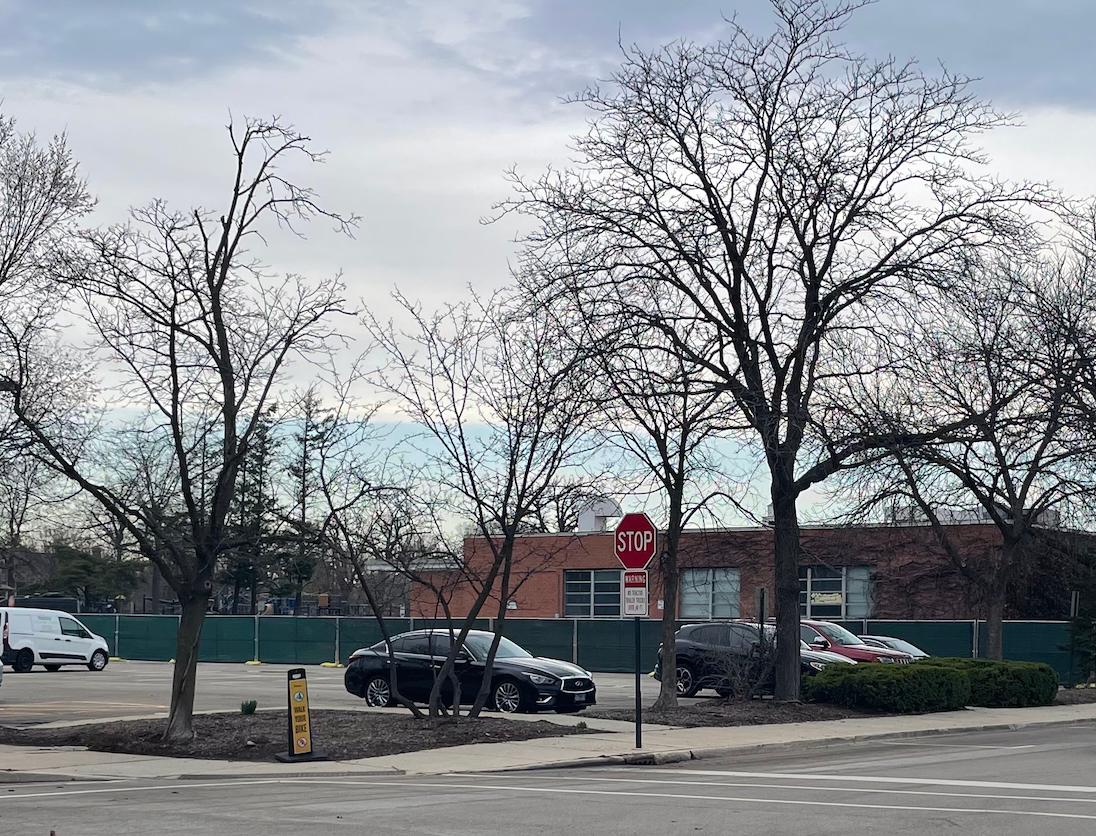
Meanwhile, demolition has begun, yet no clear plan for development exists. The site remains idle, underutilized, and economically stagnant—a financial drag on the village for nearly two decades.
A Ray of Hope
Despite its flaws, the survey did surface promising ideas—primarily in the comments. Residents expressed interest in "a public gathering space mixed with shopping and dining, like a promenade or European-style piazza." Others emphasized the importance of social infrastructure: places to walk, meet, and connect, paired with thoughtful residential development.
These ideas echo the bold, forward-thinking spirit that defined Winnetka in 1921 under Edward H. Bennett's Master Plan. The irony is that today's leadership appears more focused on preserving that legacy than embodying its willingness to innovate.
The Participation Problem
Only a small, highly engaged segment of residents continues to shape major decisions in Winnetka. The survey drew approximately 1,271 responses—about 10 percent of the population. That is not a meaningful mandate for determining the future of one of the village's most important sites.
Ninety percent of residents did not participate, and that absence should not be interpreted as agreement. More likely, it reflects fatigue after nearly 20 years of task forces, working groups, surveys, meetings, and proposals that have produced little clarity or progress.
Engagement will remain low until residents are presented with real, fully developed options—plans that clearly outline costs, benefits, tradeoffs, and long-term impact.
A Tale of Two Winnetkas
At its core, this debate about the post office reflects two competing visions for Winnetka—what it should be, and who it should serve.
One vision seeks to preserve the village as it was, encasing it in the cultural amber of a bygone era. The other recognizes that Winnetka must evolve to meet the needs of today's residents—families, young professionals, and older adults alike.
Consider the growing number of longtime residents who wish to downsize but remain in the community. Without appropriately sized and attainable housing—such as condominiums—they are forced to leave. At the same time, younger families struggle to find entry points into the market.
Failing to address this is not a neutral choice. It is a decision that limits mobility, constrains growth, and contributes to stagnation.
A well-executed mixed-use development at the Post Office site would help solve these challenges while generating significant revenue—resources needed to support infrastructure, public safety, and the continued strength of local schools.
The Moment Ahead
What happens in the coming months will shape Winnetka's financial, social, and civic health for decades. What is needed now is straightforward: a defined set of realistic alternatives for the Post Office site, each aligned with the village's comprehensive plan and evaluated for public benefit, cost, and economic impact.
And as village leadership does its part, residents must do theirs. This is a consequential decision. It should not—and cannot—be left to a small fraction of the community to decide for everyone.
\# \# \#
Our Town Winnetka would like to hear from you and open a dialogue with our readers. Please click the link on our website to submit your opinions.
Founded in 2024 by Ed Harney and Ian Larkin,\ Our Town Winnetka (OTW) was organized with a simple principle: We need to be more inclusive and transparent in our Winnetka Caucus and Government Process.*
\Ian Larkin, given his 2025 WCC Chairmanship, has resigned from OTW.*
Our Promise to You: Winnetka, simplified. With clarity, transparency, and a balanced point of view.